Akorfa Dagadu ’26 named 2026–27 Schwarzman Scholar
Dagadu: “When we think about the manufacturing hub of the world, it’s China”





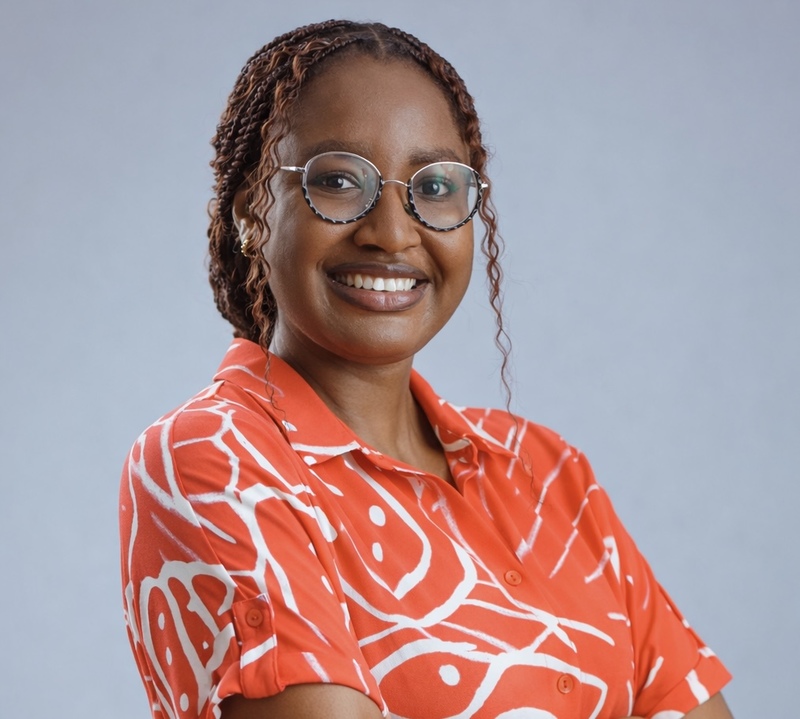
Photo provided by Akorfa Dagadu
On Jan. 15, the Schwarzman Scholars Program welcomed 150 scholars to its 11th cohort, including MIT’s Akorfa Dagadu ’26. Scholars attend a one-year, fully-funded master’s degree in global affairs at Schwarzman College, a residential college at Tsinghua University in Beijing.
Dagadu, an international student from Ghana, studies Chemical-Biological Engineering (Course 10-B). As part of the Alexander-Katz and Cordero Labs, she does research on designing enzyme-polymer systems to break down plastics. She has co-authored several publications, including one published in the American Chemical Society journal, and received awards including the CellPress Rising Black Scientists Award. Dagado also co-founded Ishara, a circular plastics start-up advancing recycling in Ghana. She plans to pursue a PhD in chemical engineering, specializing in polymer science and material sustainability. The Tech interviewed Dagadu about her thoughts on receiving the scholarship and her goals as a scholar.
This interview has been edited for clarity and organization.
The Tech: How did you feel when you learned you were chosen for this award?
Dagadu: Very happy and nervous at the same time. It was around exam season, so I was nervous about exams, but excited about my acceptance; the Schwarzman Scholars program was something that I was just trying for trying’s sake. I wasn’t optimistic that I was going to get in, so when I got the call that I was chosen, I was so happy.
TT: What do you hope to accomplish as a Schwarzman Scholar? How does this connect to your long-term professional goals?
Dagadu: Most of my life has been focused on waste and waste management, wondering why we produce so much material without thinking about what happens when they are out of use. I mostly joke with my friends that I live in the “away” when you say, “throw it away.”
In terms of my long-term goals, I want to establish a materials hub that rethinks the way we design materials from the beginning. Let’s design plastics that we know are not going to be a problem after we’ve used them.
If we are thinking of redesigning materials from the beginning, it makes sense to start from the manufacturing hub of the world. When we think about the manufacturing hub of the world, it’s China. The Schwarzman Scholar program offers a gateway to that hub, allowing scholars to go to China and discuss real-world issues with a cohort of like-minded people and think about how to solve them. It would allow me to apply policy and business and entrepreneurship to what I want to do, which is research.
TT: How has your time and interactions at MIT contributed to your goals?
Dagadu: When you come to MIT, they say it’s a very rigorous environment. Your first year, they break you down, and they re-mold you into a completely different person with different perspectives.
In terms of communities within MIT that have helped my progress, the first is the Alexander-Katz Lab. I specifically worked under Tianyi Jin PhD ’25. I first met him as a freshman during IAP. I wanted to do a UROP; I didn’t care what it was as long as it was in plastics. It was computational research, and even though I didn’t know how to code at that time, he was very patient. He took me through the beginning of coding to building large-scale simulations and even writing a paper. I was in that lab for about three years. Jin, being from China, also informed me about Tsinghua University and the Chinese climate.
Outside academics, my biggest community has been the African Student Association (ASA). It is a group of people there for each other, sharing opportunities and wisdom. There’s a transfer of knowledge from people who have done it before you. Jessica Quaye ’20 was a Schwarzman Scholar, also from Ghana, and the former ASA president. She advised me through my MIT journey.
My professors were very helpful when it came to writing recommendation letters and helping me think about future plans and a PhD. Professor Alfredo Alexander-Katz provided one of my recommendation letters.
The biggest community that has shaped my views and made me want to go into public policy outside of my engineering degree is the MIT Kuo Sharper Center for Prosperity and Entrepreneurship. I’m into entrepreneurship since I have a start-up in Ghana. I joined the Student Fellowship twice in my sophomore and junior year. The Center has been phenomenal in pushing me to think of solutions outside of the lab and giving me support for my start-up. The executive director, Dina Sherif, helped me apply for the Student Fellowship and gave me a recommendation for the Schwarzman program.
The Distinguished Fellowships Office was especially helpful when it came to preparing for the Schwarzman interviews.
The last person is not affiliated with MIT, but he has been instrumental in getting me where I am today. Ferdinand Quayson is the Director of the Young Achievers Foundation in Ghana. The Foundation paid for my SAT application and Quayson has mentored me all the way through MIT. He provided my third recommendation.
TT: Do you have any advice for students interested in this scholarship?
Dagadu: Just go for it. I thought I wasn’t qualified enough for the scholarship, even though it turns out that I was. MIT has a way of making you feel like you’re less qualified than you are, but when you go outside of the MIT bubble, you realize that you do know quite a lot.
Throughout the process and interviews, I realized I know my research. I know what I’m doing. So just applying and even going through the process itself is a worthwhile experience.