Harvard GAASA hosts community memorial for Nolan Wells
Prof. Cornell William Brooks: “We demand a full, transparent, vigorous investigation by the Department of Justice”





Jaden Chizuruoke May–The Tech
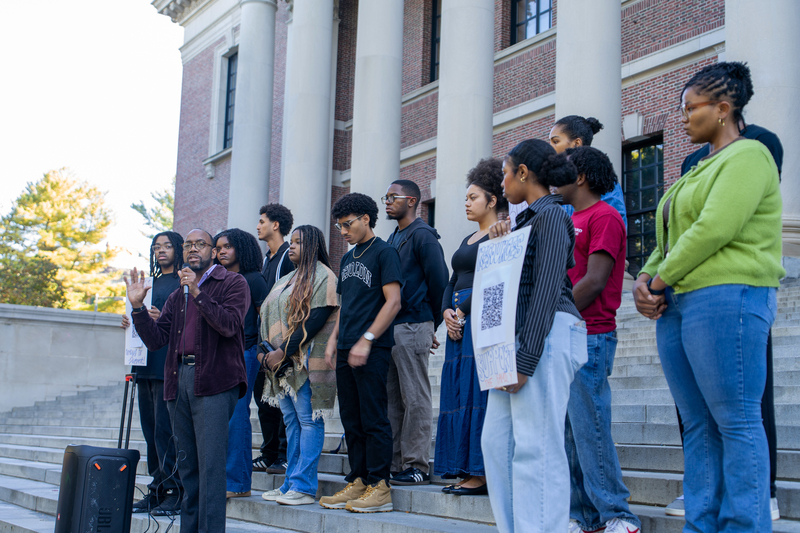
Photo courtesy of Rakeem McFarlane
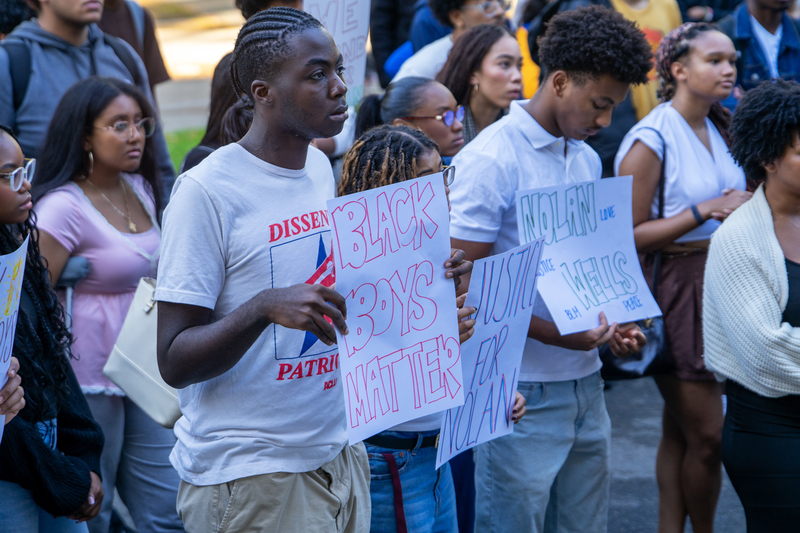
Photo courtesy of Rakeem McFarlane
Community members and students from local universities like Tufts, MIT, and Wellesley College attended a memorial in honor of the late Nolan Xavier Wells on the steps of Harvard University’s Widener Library on Oct. 12 from 3 to 4 p.m.
The memorial, organized by Harvard’s Generational African American Student Association (GAASA), sought to both commemorate Wells’s life and to “demand accountability” regarding the circumstances of his death, according to an Instagram post advertising the event.
Background on the case
18-year-old Nolan Wells was found deceased on July 6, 2026, just two days after going missing on a boat trip to Horn Island, Miss. Wells departed with friends on a boat bound for the island on the morning of July 4, but did not return with them the following day. According to GPS data released by the Mississippi Department of Marine Resources, the boat arrived back on the mainland at 5:44 p.m. However, according to the Jackson County Sheriff's office, Wells’s mother was only notified of her son’s disappearance roughly five hours later at 11 p.m.
While a statement given by the sheriff on July 6 declared that there was “no foul play” involved in Wells’s death, discontent with that summary has grown both online and on the ground during the months since. Group photos trending on social media featuring Wells and an official photo provided to CNN by the Jackson County Sheriff’s department Wells have portrayed Wells as the only Black individual present, which has been taken in tandem with Mississippi’s extensive and difficult history of racial violence to suggest a potential racial element at play in the case.

A second, widely held point of concern revolves around the cause of Wells’s death. As of now, a grand jury has declared Wells’ death an “accidental drowning,” but critics have pointed out the declaration’s conflict with the latest autopsy reports which label the cause of Wells’s death as “undetermined.” The facts surrounding the cause of death have been largely disputed by Wells’s family, their legal representatives, civil rights organizations such as the National Association for the Advancement of Colored People (NAACP), and federal lawmakers, but as of now, no one has been indicted in the case.
Memorial remarks
Harlie Williams, a junior at Harvard and GAASA’s political action chair, opened the memorial at Widener Library. She asked the crowd how long it would take for the name Nolan Wells to fade from headlines and the call for accountability to persist when the public’s attention “moves elsewhere.”
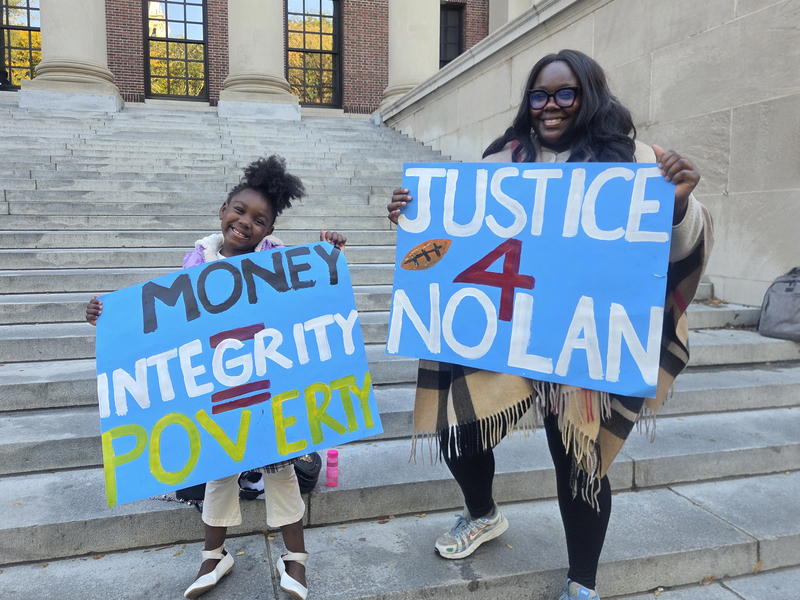
Within the audience, many held hand-written or printed signs with messages like “Say his name” and “Black boys matter.” Williams asserted that one of the most impactful actions one could take to ensure Wells’s death stayed at the forefront of popular conversation was to pay attention.
“The history of Black freedom is in part the history of people who refused to look away,” she said. “Today, we are called to carry that tradition forward. [Nolan Wells’s] family deserves answers. And the pursuit of those answers must continue.”
In addition to GAASA representatives, other leaders from Harvard’s Black organizations also shared the stage. Ethan Ristu, the president of the Harvard Black Men’s Forum, highlighted the significance of Wells’s life and underscored his death as merely the latest tragedy in an ongoing legacy of racial violence against Black people in the United States.
“We’re seeing again the same pattern unfurl,” said Ristu, referring to the controversy surrounding Wells’s cause of death.
He went on to mention Kendrick Johnson, a 17-year-old Black boy who was found dead inside a rolled-up gymnasium mat at a Georgia high school in 2013. Ristu parallelled the tragedy with Wells’ case, claiming that while it “may never be known” what really happened to Wells, there was “more that could be done” to find out.
“And while there is evidence that Nolan had comported his life with the utmost dignity and respect and care,” said Ristu, “it is unfortunate that he and his loved ones have not been afforded that same dignity and care regarding the circumstances of his death.”
It was not only students speaking. Harvard Kennedy School Professor and former president of the NAACP Cornell William Brooks followed Ritsu’s speech. Brooks began by grounding his words from the perspective of a father with two sons.
Brooks likened Wells to a first-year student at Harvard. “Nolan Wells was 18 years old, about the same age as many of you,” he said. “He was someone filled with the possibilities of youth, the aspirations of a young man on the cusp of life.”
During his speech, Brooks defended the many questions pertaining to Wells’ death. “These are reasonable, rational questions,” he claimed. “It is immoral not to answer those questions.” Quoting Frederick Douglass, Brooks shunned those who suggested otherwise, comparing such people to “men who want crops without plowing the ground, people who want rain without thunder and lightning.”
Dre’Shon Jackson, the president of Harvard’s Black Student Association, began a call and response following the conclusion of Brooks’s speech. Jackson called out the words “We stand,” and was met by a loud and invigorating response seconds later that boomed, “For Nolan Wells.”
Ending the official memorial was Sandra Smith Johnson, the vice president of GAASA. She began her remarks by reading an excerpt from Reverend Dr. Martin Luther King Jr.’s “Letter from Birmingham Jail,” drawing a comparison between King’s rhetoric regarding the “underlying causes” of racial violence with how she believed members of the community ought to look at Wells’ case.
“Dr. King challenged the same system that called Nolan Wells’s waterless lungs a drowning, Kendrick Johnson’s rolled-up vertical body an accident, Emmet Till’s mutilation deserving, and the knee on George Floyd’s neck unintentional,” Johnson said.
Johnson pushed against the idea of sitting “idly within the gates of our institutions,” encouraging the crowd of students and community members to recognize the atrocities which occur beyond university limits. To close, Johnson, alongside the other organizers, pointed to a resource document they wrote detailing how to drive the investigation of Wells’s case forward.
“Thank you for joining us today and being present,” concluded Johnson. “Rest in peace, Nolan Xavier Wells.”