AAPC Playfest spotlights community voices
Local Asian American playwrights showcase ten bite-sized plays





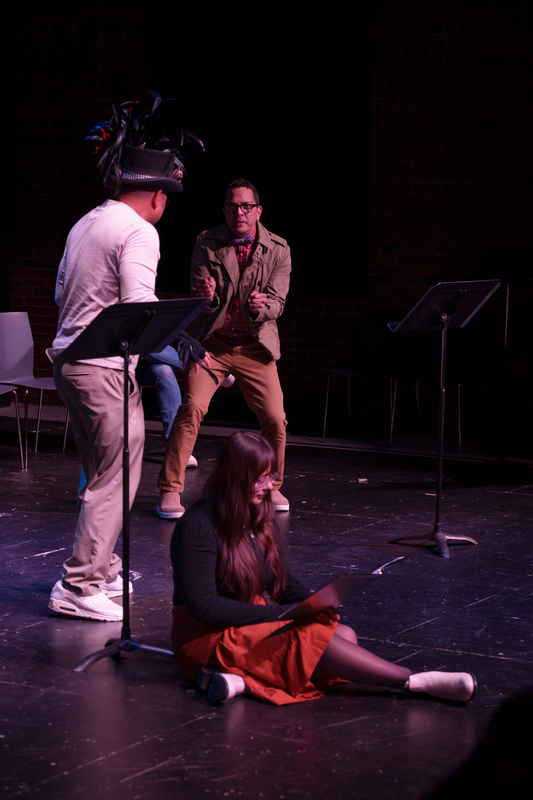
Photo courtesy of Al Rangone and Kai Chao/Asian American Playwright Collective
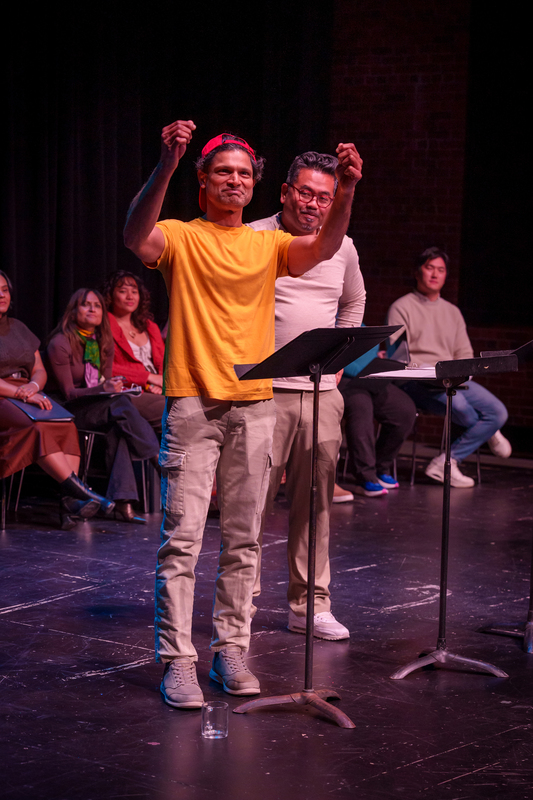
Photo courtesy of Al Rangone and Kai Chao/Asian American Playwright Collective
AAPC Playfest 9: Building, Becoming, Belonging
Presented by the Asian American Playwright Collective
The Foundry
Oct. 23–25, 2026
From Oct. 23 to 25, the Asian American Playwright Collective (AAPC) hosted their ninth annual Playfest — a staged reading of ten short plays written by their members — in Cambridge at the Foundry.
Designed to be a self-sustaining community arts hub, the Foundry has a massive interior, with studios and makerspaces lining the main hall. AAPC Playfest 9: Building, Becoming, Belonging was held towards the back of the entryway. At the check-in area, attendees were handed programs and could buy snacks or anthologies of past AAPC plays. As audience members were ushered to their seats, chatter slowly transformed into murmurs. Silence filled the air once the actors walked out the side door, hovering over chairs along the back wall. At last, they all took their seats — except for three women, who stepped forward to kick off the opening play, Diana Khổng’s Auntie Stoner Sess.
Although the plays were all themed around “Building, Becoming, and Belonging,” they were surprisingly diverse in content. Some, like Jamie Lin’s Sibling Rivalry, poked fun at the parental pressures of brother-and-sister competition and were playful and earnest. Others embodied a more serious tone, such as Angele Maraj’s Tell Me A Story, which told the tale of a mother and daughter facing domestic abuse. Others used the art form to express themes of political protest and community solidarity, which was poignantly illustrated in Hortense Gerardo’s Scenes from a Rally, for instance.
But a play is only as good as its performers. Playfest 9 certainly brought together a wonderful cast of local actors who fully stepped into their characters’ shoes. In Christina R. Chan’s Why Aren’t You Boycotting Too?, Alan Kuang squeezed smaller kicks into his performance, capturing the spirit of a restless toddler boy. Meanwhile, Chantha Luk “traded shoes” for talons, playing a bird born from human hands in Rosanna Yamagiwa Alfaro’s The Second Coming. Many of the actors performed in multiple plays, showcasing their range from medieval maidens to lumpia-making ladies.
Despite its modest production value, AAPC Playfest 9 was an event truly full of heart. More than anything, it embodied a strong love and celebration for the vibrant Asian American arts community in Boston, from the playwrights to the actors and the technical staff. Those engaged in the theatre world know that Asian American voices are rare, so groups of solidarity like the AAPC are essential. The Asian American theatre community is tight-knit yet eternally welcoming, and, for an evening, they welcomed the audience too.
An anthology of this year’s — as well as previous years’ — plays can be purchased on the AAPC website: https://aapcboston.wixsite.com/mysite/anthology.