The Providence Bureau of Invest-Egg-Ations wins the 2026 MIT Mystery Hunt
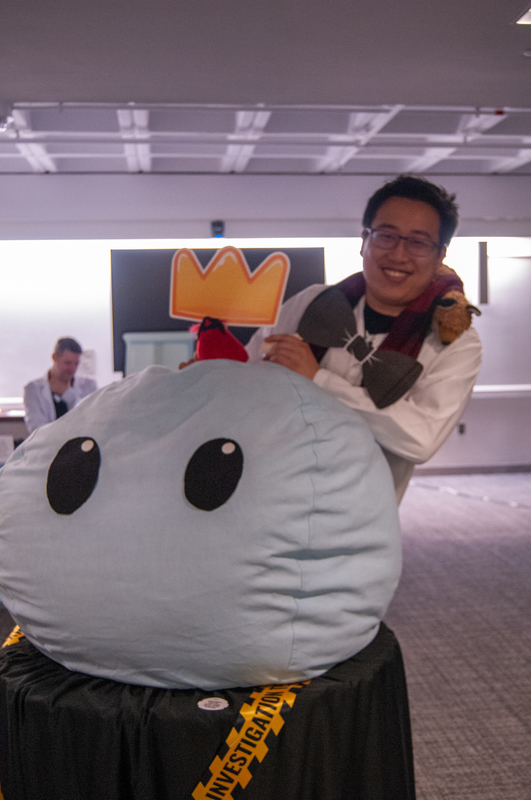
This year’s theme centered on puzzle monsters, a.k.a. Puzzmon





Levy Le–The Tech
Levy Le–The Tech
Levy Le–The Tech
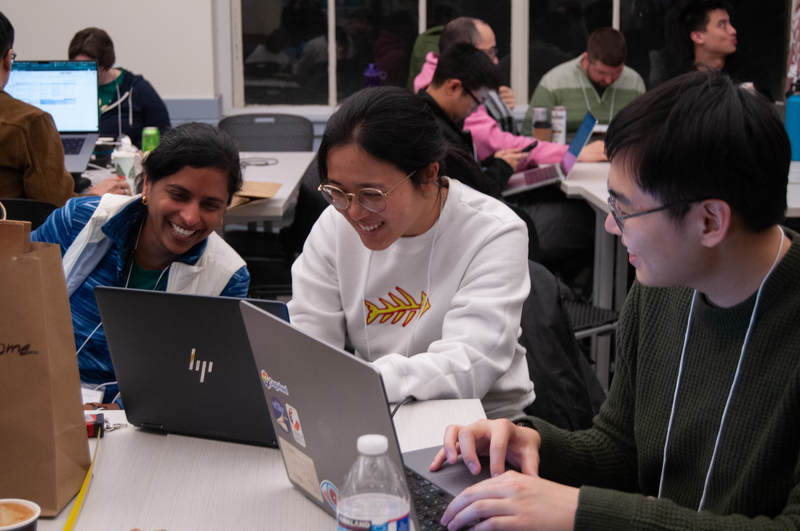
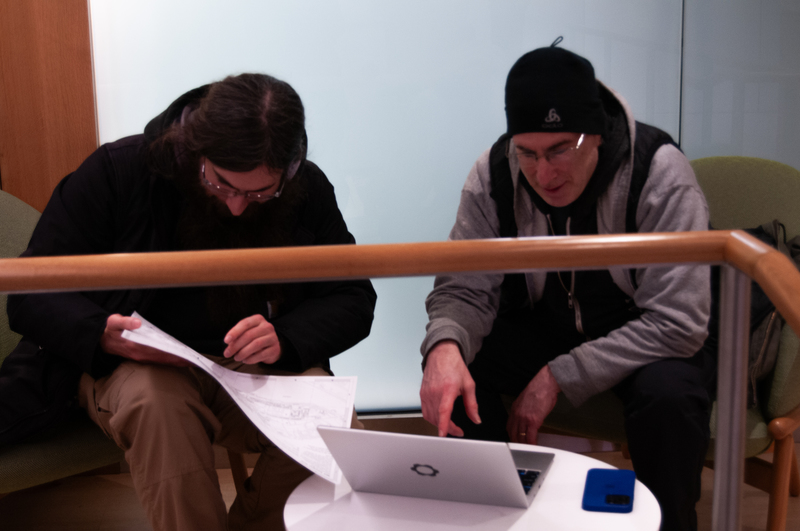
From Jan. 16 to 19, over 5,000 participants across approximately 280 teams competed in the 2026 MIT Mystery Hunt. Over 2,400 participants representing around 150 teams competed directly on campus, where they worked in classrooms to solve a variety of puzzles from crosswords to logic games. The team “The Providence Bureau of Invest-Egg-Ations” won the hunt and was awarded a special themed coin on Sunday, Jan. 18 at 3:05 p.m. Their win required around 50 hours of solving to complete approximately 230 puzzles. In total, 15 teams solved all the puzzles by noon on Monday, Jan. 19.
One of the largest puzzlehunts in the world, MIT’s Mystery Hunt challenges teams to solve a series of puzzles and meta puzzles to find a coin hidden on campus during the Martin Luther King Day Weekend. Mystery Hunt runs on a hybrid format, meaning that participants and teams can also participate remotely by entering puzzle submissions on a custom website.
The hunt is designed such that a team can work on a selection of puzzles at the same time, allowing them to advance in the game even if they may be stuck on one puzzle. In addition, this year’s hunt had non-puzzle tasks, which participants completed to gain “research points” such that they could unlock other puzzles. These tasks, such as submitting photos of touching grass, were designed to be friendly to all ages and experiences, including children and first-time participants.
The Mystery Hunt’s theme and puzzles are designed by the previous year’s winning team. Team Cardinality, winners of the 2025 Mystery Hunt, wrote the hunt and chose puzzle monsters (a.k.a. Puzzmons) as the theme, which was inspired by the Pokémon franchise, according to Puzzle Club Secretary and writing team member Riley Kong ’25. As introduced in the kickoff event, the Puzzmon is a cryptid species that can accidentally open portals that could lead to the world’s destruction. However, if participants solve puzzles, they can befriend the Puzzmons and help close the portals.
Many participants shared that they had a lot of fun solving a diverse array of puzzles with their team members. In addition, they were impressed by the design and execution of the puzzles at Mystery Hunt.
Eric Zhan ’28, a member of the winning team, described the hunt as “incredibly fun” and found the puzzles “absolutely amazing.” He also liked the concepts that Team Cardinality designed for the puzzlehunt. “This year’s hunt was very hyper-focused on the puzzle elements and structure, and I really enjoyed the amount of work that went into it,” Zhan wrote.
Zhan credits the team’s large membership and strong organization for their win. A lot of time went into discussing and planning for the hunt. Sarah Porter ’27, another member of the Providence Bureau, attributed the team’s ability to work on the puzzles overnight as integral to helping them win. The team completed an entire round in a night in this manner.
Marvin Mao ’28, Puzzle Club Event Chair, enjoyed Mystery Hunt because of his team’s large in-person presence, allowing them to finish the hunt. “No puzzlehunts I’ve done before really compare to the scale of having over 30 people all in a room puzzling away for a weekend,” Mao wrote. One puzzle that he particularly enjoyed solving was in a later round, which required placing many pieces on a hexagonal grid to “unlock more of the map.” Mao also found the non-puzzle tasks to be fun, such as using certain objects like checker pieces to communicate to teammates.
Landon Carter ’17 MEng ’18, found the design of the puzzles to be “pretty clean,” and liked that the hunt had “a lot of little mini games” that could be played within the puzzle. He also appreciated that this year’s hunt had a lot of short events to facilitate interactions between participants, including games from advanced pictograms to an integration bee.
Troy Thomas enjoyed the puzzles’ interconnected nature, since he personally likes “meta matching” as a puzzling style. Unlike other puzzlehunts he has attended, Thomas considers Mystery Hunt to be unique for its large-scale production. “Just having this much effort to go into such a curated event is really good to see,” Thomas said.